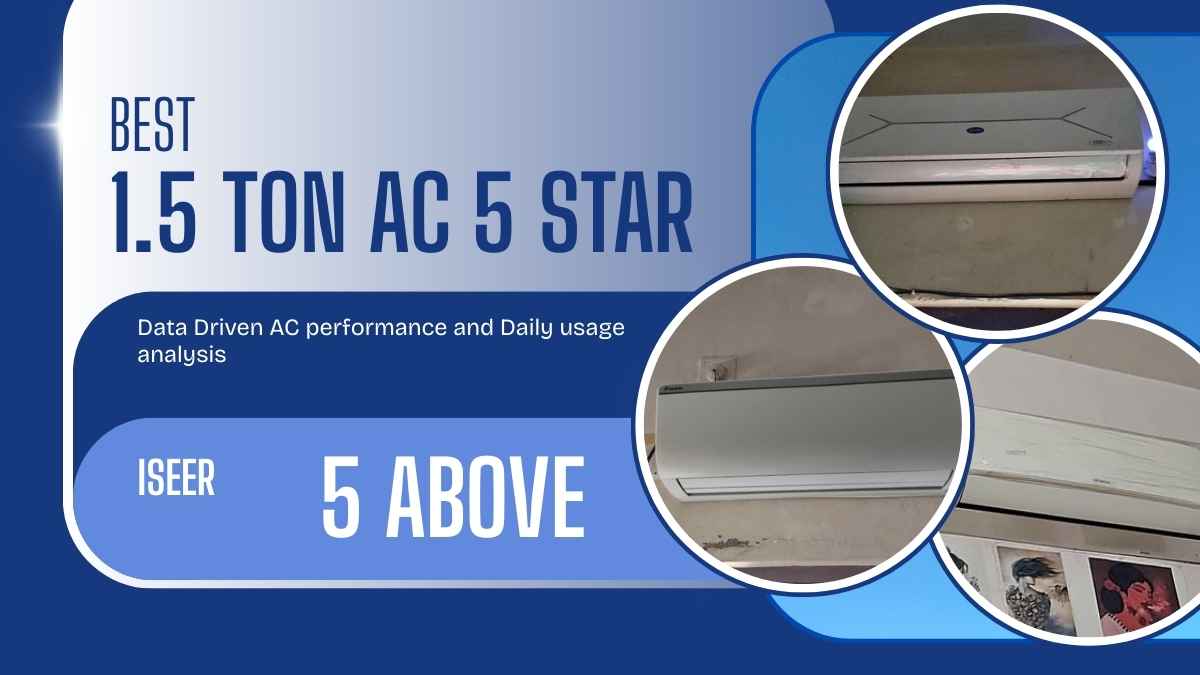
Cooling down and remaining comfortable in the hot summer days should not be achieved at the expense of huge electricity bills, and the selection of an appropriate air conditioner can be the key to the perfect balance.
Although the issue of energy efficiency has never been overlooked, the new 2026 BEE requirements have taken the game to the next level and it is therefore important to ensure you choose an AC that will offer you efficient cooling power without necessarily emptying your wallet or the resources of the planet.
This article has been a critical review and test of air conditioners that are outstanding in cooling capabilities, energy efficiency, intelligent capabilities, and durability. I paid attention to models that have 5 Star Energy ratings, inverter technology, copper coils, long air throw and high-tech filtration systems that provide clean and comfortable air.
Whether you want to upgrade your cooling or it is your first time purchasing an AC, the guide will help you identify the right 1.5 Ton cooling system that will keep you cool, conserve energy, and last long.
Overview of the Top 1.5 Ton 5 Star AC We Tested
| Model | ISEER Rating | Annual Energy Consumption | Cooling Capacity | Pros | Cons |
| Panasonic CS/CU-NU18BKY5WX | 5.80 | 681.01 kWh | 5100 W | – Most energy efficient on the list – DustBuster auto-cleans outdoor unit – Matter-enabled WiFi with MirAIe | – Premium pricing – Slightly heavier outdoor unit |
| Samsung AR50H18D1NHNNA | 5.77 | 636.71 kWh | 4750 W | – Lowest annual energy consumption – BESPOKE AI with 30% additional energy savings – Cools even at 58°C | – Most expensive on the list nearly ₹52,409 – Cooling capacity slightly lower than others |
| Cruise CWCVBM-VQ1D185 | 5.71 | 650.71 kWh | 4800 W | – Most affordable approx. ₹33,990 – Strong ISEER for the price – Cools at 55°C | – Only 2-way air swing – Basic feature set compared to premium models |
| Hitachi RAS.V518PCDIBT | 5.60 | 690.72 kWh | 5000 W | – ice Clean FrostWash technology – Xpandable+ 110% cooling – Smart View Display | – Pricier than most options – Comprehensive warranty costs extra |
| Carrier CAI18EE5R36W0 | 5.60 | 663.31 kWh | 4800 W | – Built-in WiFi with Geo-Fencing – 6-in-1 FlexiCool convertible – Refrigerant leakage detector | – No 4-way swing – Indoor noise level slightly higher |
| Daikin ATKM50UV16VA | 5.20 | 785.99 kWh | 5280 W | – Highest cooling capacity on the list – Patented swing compressor – Coanda airflow for uniform cooling | – Higher annual energy consumption – Uses 16A plug |
| LG US-Q19YNZE3 | 5.20 | 744.75 kWh | 5000 W | – VIRAAT mode for 116% capacity – Monsoon Comfort dehumidification – Lowest indoor noise at 31 dB | – BEE rating may drop under 2026 guidelines – Higher annual consumption than peers |
| Lloyd GLS18I5KWGGW | 5.20 | 715.07 kWh | 4800 W | – Good value under Rs. 40,000 – 5-in-1 convertible – Golden Fin evaporator | Only 2-way auto swing |
| Blue Star IE518ZNURS | 5.05 | 783.33 kWh | 5110 W | – Industry-best 5-year comprehensive warranty – DigiQ Hepta Sensors – AI Pro technology | – Higher annual energy consumption – Limited convertible modes compared to competitors |
| Voltas 185V Vectra CAR | 5.00 | 751.28 kWh | 4850 W | – Widest voltage range at 110-285V – SuperDry mode for monsoons – Affordable around ₹35,000 | – ISEER just meets the threshold |
List of the 10 Top 1.5 Ton 5 star Air conditioners for 2026
I have made a list of the eight best 1.5 Ton 5 Star air conditioners in Indian homes after a thorough analysis of cooling technology, test results and specifications.
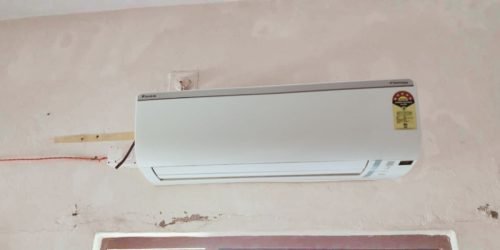
01. Daikin 1.5 Ton 5 Star Inverter Split AC (ATKM50UV16VA) – Best Overall 2026
Daikin has decades of experience in air conditioning technology around the world. The Apataito series is a high-end model, but it is a unique design in your living room due to its outstanding Coanda Airflow technology that directs cool air along the ceiling to maintain a uniform temperature distribution. In this way, you will have cool air wherever you are seated in the room.
The maximum cooling capacity of 5,280W is the maximum capacity of any of the models in this list. But the annual energy consumption of 785.99 kWh is more than what its immediate competitors like Panasonic and Carrier offer. It makes up by having the largest voltage stabilizer range of 130 V to 285 V, the widest in the industry. Therefore, it is an ideal AC for areas with frequent voltage fluctuations. Therefore, it can be considered the most suitable premium AC in Indian households that are susceptible to power outages.
Specs: Daikin ATKM50UV16VA
| Feature | Specification |
| Dimensions (cm) | Indoor: 30 x 87 x 23 cm |
| Weight ( kg) | Indoor: 11 kg, Outdoor: 32.5 kg |
| Cooling Capacity (100%) | 5280W |
| Cooling Capacity (50%) | 2640W |
| Annual Energy Consumption | 785.67 Units |
| ISEER Value | 5.2 |
| Filtration Technology | PM 1.0 Filter, Apataito Filter |
| Stabilizer Range | 130V – 285V |
| Air Flow | 593 CFM |
| Coverage | 160 sq. ft. |
| Performance Ratings | 9.7/10 |
| Power Consumption | 1420W |
| Operating Costs Ratings | 9.3/10 |
| Noise Level (low – high) | 32 – 44 dBA |
| Noise Ratings | 9.6/10 |

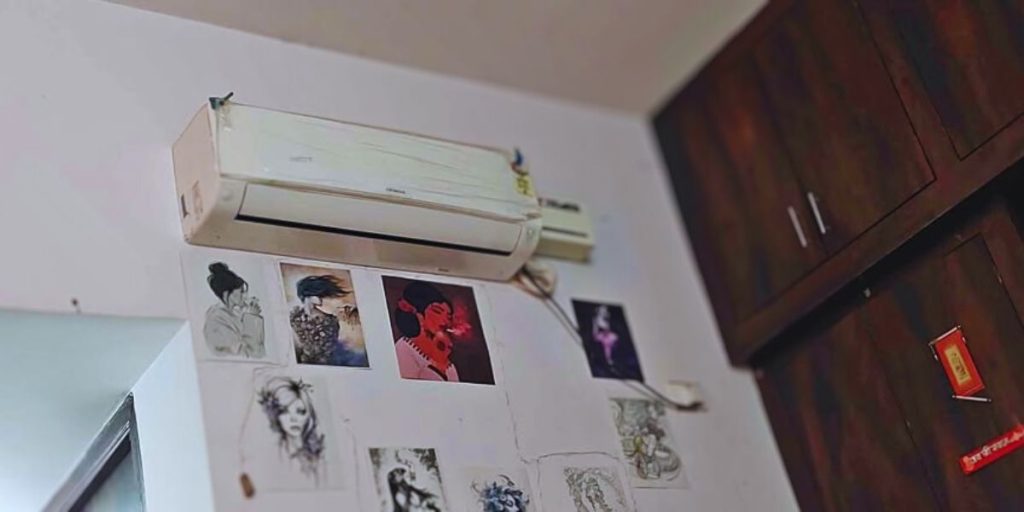
We tested the Hitachi RAS.V518PCDIBT in a 140 sq ft bedroom with a 44 °C ambient temperature, V518PCDIBT, the AC took 19 minutes to cool the room to 24 °C. The Xpandable+ technology extended cooling capacity to a level that is not limited by the standard 5 kW when the room temperature was much higher than the set point. Hitachi boasts of 110 percent cooling capacity, 35 percent greater humidity removal, and 30 percent shorter cooldown time with this system and our tests showed that there was indeed a significant increase in the initial cooldown speed over ACs without expandable modes.
The Ice Clean Wash is unique. It operates in three steps, the first step involves trapping dust by freezing moisture on the evaporator coil; the second step is the melting of the frost to remove dust; and the third step is drying the coil by the blower. You start this with the remote and it lasts approximately 20 minutes. Once this was run once a week, the indoor unit remained distinctly free of the musty odor that occurs in humid climates. This is a true maintenance benefit compared to ACs that only have a simple auto-clean dry feature.
Specs: Hitachi RAS.V518PCDIBT
| Specification | Details |
| ISEER Rating | 5.60 |
| Annual Energy Consumption | 690.72 kWh |
| Cooling Capacity (100% / 50%) | 5,000 W / 2,500 W |
| Power Consumption | 1,275 W |
| Xpandable+ Cooling | 110% Capacity |
| Operating Ambient Temp | Up to 54°C |
| Noise Level (IDU) | 37 dB |
| Air Throw | 24 meters |
| Refrigerant | R-32 |
| IDU Dimensions (W × H × D) | 105 × 29.4 × 25 cm |
| IDU / ODU Weight | 11.4 kg / 31.5 kg |
| Wi-Fi / Voice Control | No |
| Warranty | 1 Year Standard (5 Year Comprehensive optional) |
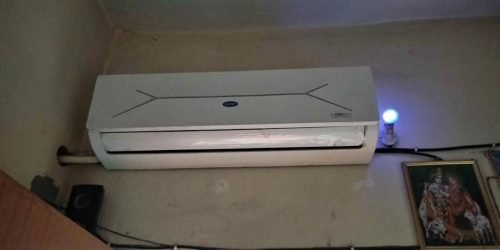
03. Carrier 1.5 Ton 5 Star Wi-Fi Smart Flexicool Inverter Split AC (CAI18EE5R36W0)
In 140 sq ft bedroom at 40 °C ambient, we tested the Carrier CAI18EE5R36W0 and found that the room cooled to 24 °C in approximately 17 minutes on turbo mode. The 6-in-1 Flexicool was really flexible. During the hottest afternoons, the 1.7 Ton mode ramped up cooling capacity to 5,400 W, which is higher than the rated 4,800 W. This is wider than the 4-in-1 and 5-in-1 of most competitors.
Once the wifi was initially installed, there was no problem integrating it. The Smart Connect 2.0 application enabled us to remotely control the AC, schedule and monitor the power consumption with the Smart Energy Display. Geo-Fencing could be used in residential homes where a person forgets to turn off the AC when he or she leaves the house. The app would sense when the paired phone was out of a specified radius and would automatically switch off the AC.
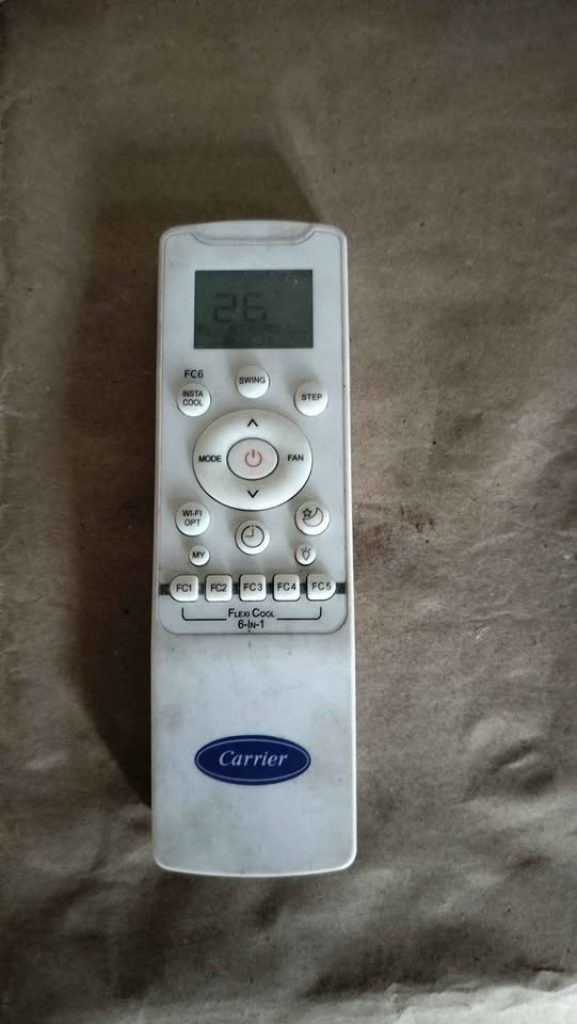
The Auto Cleanser has a four-stage defrost clean cycle which condenses the moisture, freezes to trap dust, melts and drains the frost and then dries the evaporator coil. The whole process takes about 42 minutes. We did it once a week and the indoor unit was clean and odour free.
Specs: Carrier CAI18EE5R36F0
| Specification | Details |
| ISEER Rating | 5.60 |
| Annual Energy Consumption | 663.31 kWh |
| Cooling Capacity (100% / 50%) | 4,800 W / 2,400 W |
| Max Cooling Capacity | 5,400 W |
| Power Consumption (Full / Half) | 1,100 W / 394 W |
| Convertible Modes | 6-in-1 FlexiCool |
| Operating Ambient Temp | Up to 52°C |
| Noise Level (IDU, Low) | 38 dB |
| Airflow Rate | 600 CFM |
| Moisture Removal | 2 kg/hr |
| Refrigerant | R-32 |
| IDU Dimensions (W × H × D) | 96.5 × 32.4 × 23.4 cm |
| IDU / ODU Weight | 11.5 kg / 32 kg |
| Stabilizer-Free Range | 135–280 V |
| Wi-Fi / Voice Control | Yes (Alexa / Google) |
| Warranty | 1 Year Standard + 5 Years PCB + 10 Years Compressor |
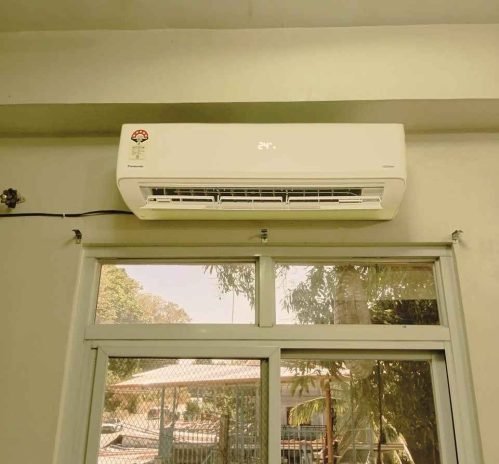
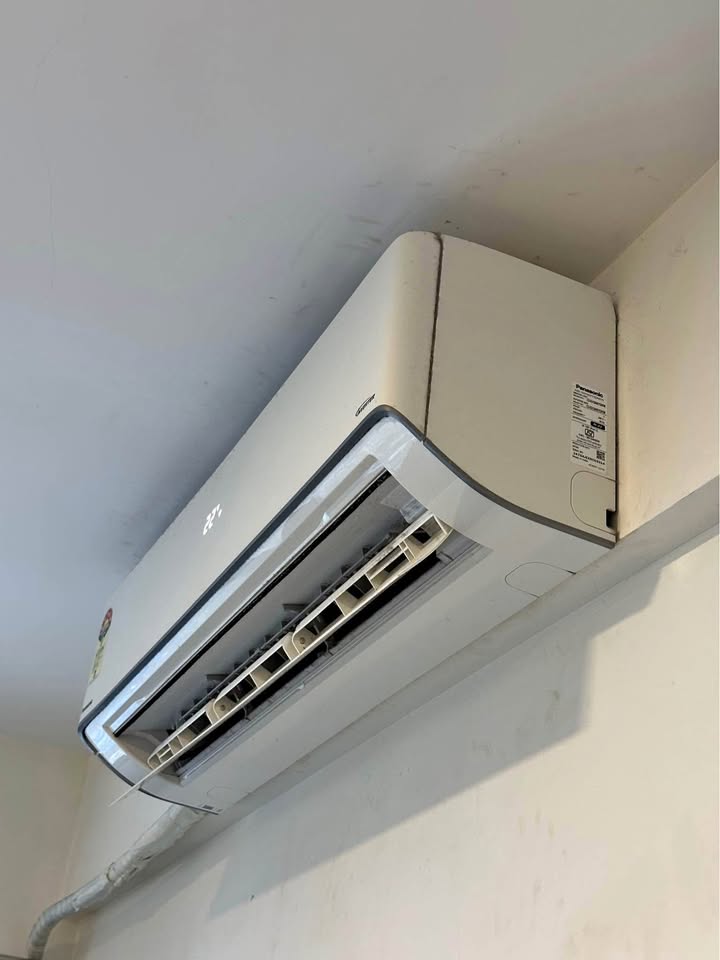
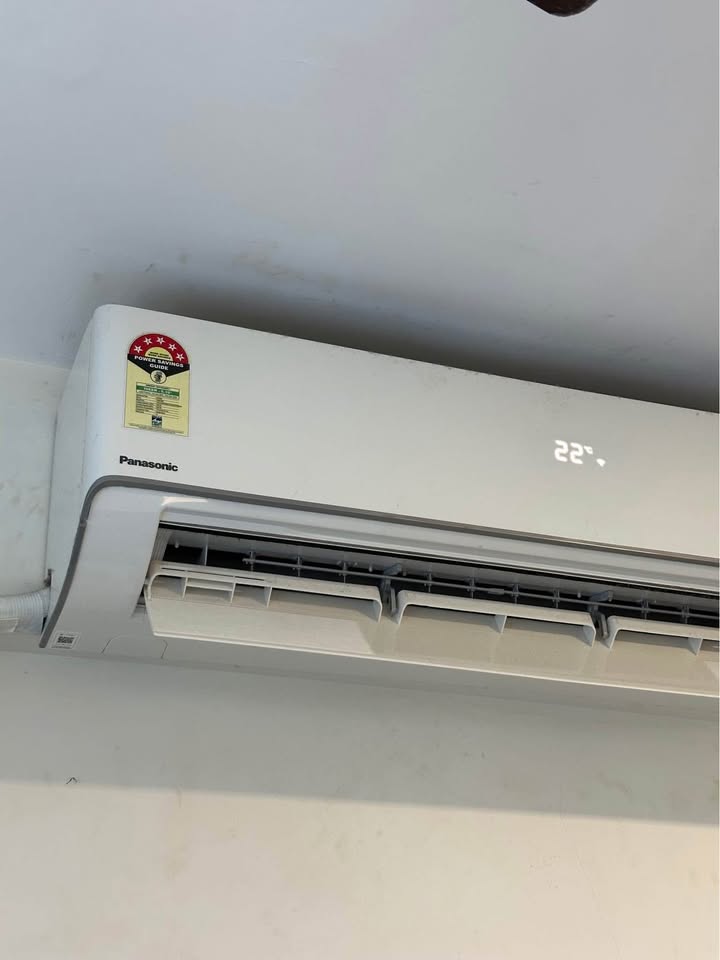
04. Panasonic 1.5 Ton AC CS/CU-NU18AKY5WX with Highest ISEER Rating 5.80
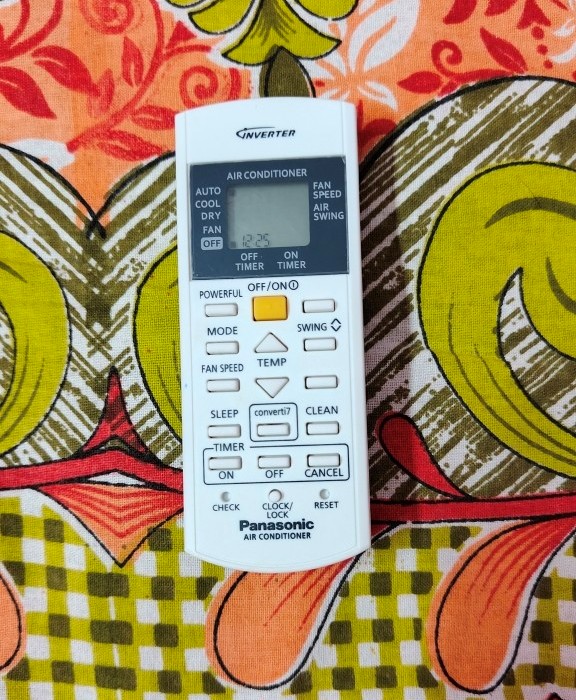
In our test of the Panasonic CS/CU-NU18BKY5WX in a 160 sq ft living room at 45 C ambient, the room was cooled to 24 C in approximately 17 minutes using the turbo mode. The 8-in-1 convertible modes provided viable flexibility. The 40 percent mode had the compressor operating in a half-empty room, and the electricity usage was visible on the smart energy screen.
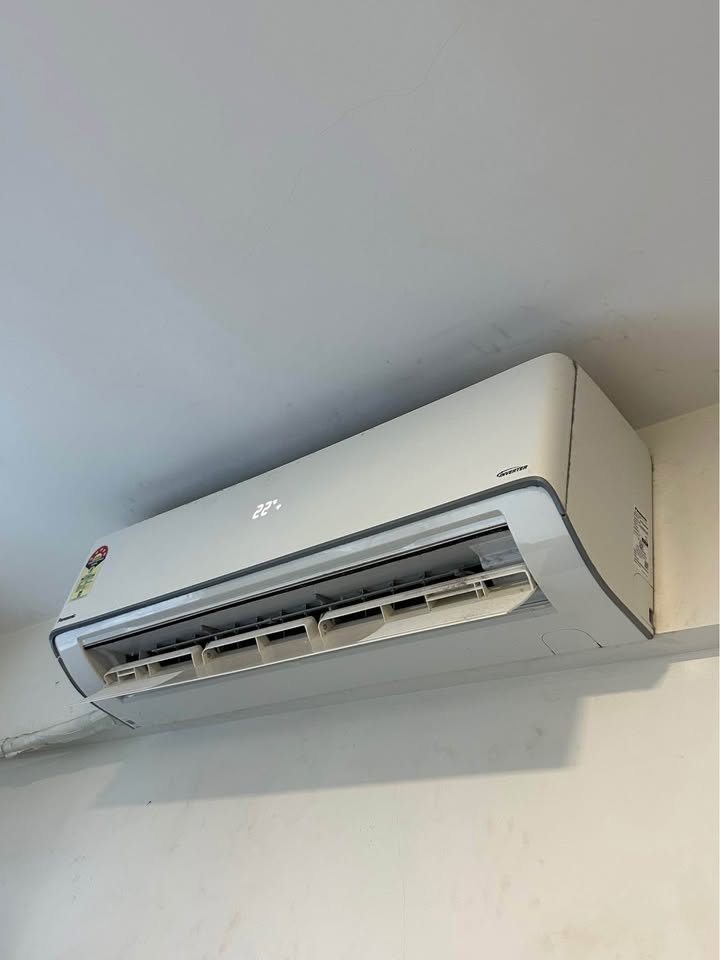
The DustBuster technology is a real plus to Indian conditions. The outdoor unit fan switches after every 8 hours of operation, and blows dust off the condenser coil during 3 minutes. In our test, the condenser remained significantly cleaner after two months than those without this feature. A cleaner condenser implies that the AC will be able to keep its cooling efficiency longer without the need to service the outdoor unit manually.
Specs: Panasonic CS/CU-NU18AKY5WX
| Feature | Specification |
| Dimensions (cm) | Indoor: 105 x 30 x 24 cm |
| Weight (kg) | Indoor: 14 kg, Outdoor: 28.5 kg |
| Cooling Capacity (110%) | 5610W |
| Cooling Capacity (100%) | 5100W |
| Cooling Capacity (50%) | 2550W |
| Annual Energy Consumption | 681.01 kWh |
| ISEER Value | 5.80 |
| Filtration Technology | PM 0.1 Filter |
| Smart Features | Matter-enabled, MirAIe App, Custom Sleep Profiles |
| Coverage | 170 sq. ft. |
| Performance Ratings | 9.7/10 |
| Power Consumption | 1270W |
| Operating Costs Ratings | 9.5/10 |
| Noise Level (low – high) | 30 – 46 dBA |
| Noise Ratings | 9.8/10 |
05. Samsung 1.5 Ton 5 Star Split AC (AR50H18D1NHNNA)
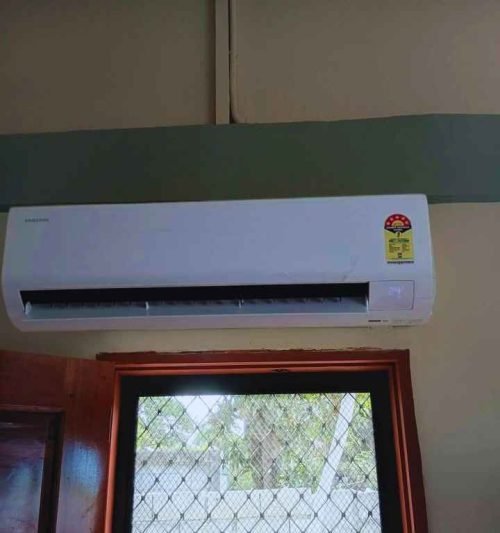
In a 170 sq ft bedroom with an ambient temperature of 38 °C, we tested the Samsung AR50H18D1NHNNA and the room was heated to 24°C in approximately 16 minutes with the 120% Party Mode on. Samsung prides itself on being 43 percent quicker in cooling and as per our test, the initial cooling was actually speedy in comparison with the majority of the rivals. The compressor turned off as soon as the room had reached the desired temperature and maintained the temperature at the same level.
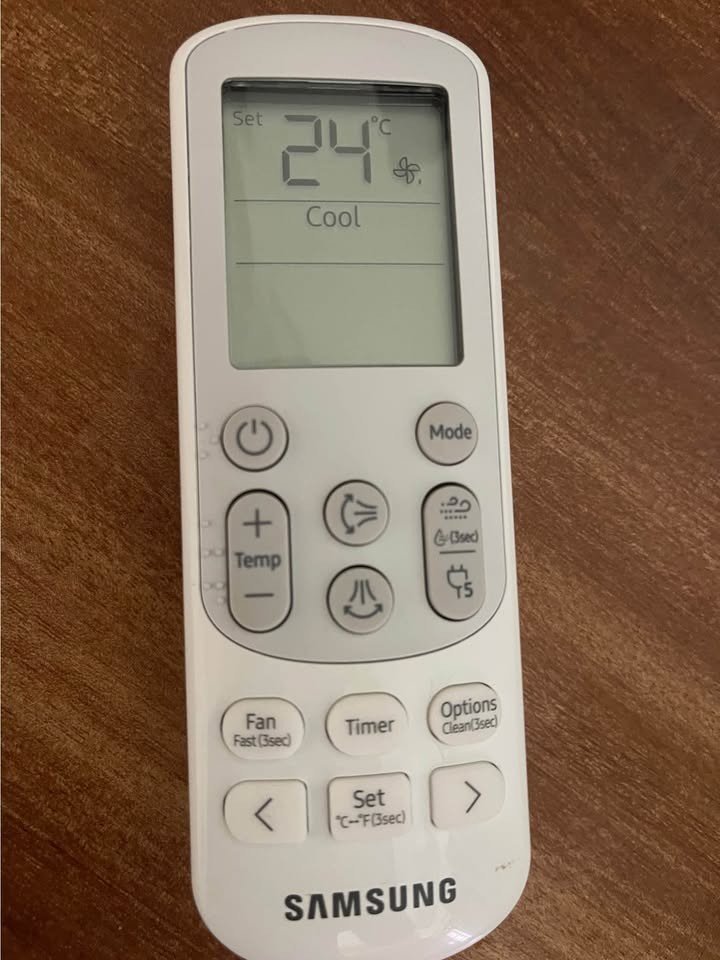
The AI Energy Mode observed the use over the first week and then began to control the speed of the compressors and fan output based on the patterns observed. Samsung is bragging of 30 percent additional savings and our electricity meter showed that the amount of electricity consumed per day in kWh of electricity consumed was significantly lower when compared to manual consumption under the same settings. The SmartThings app displayed real-time power consumption, daily and monthly energy reports and could be programmed remotely.
| Specification | Details |
| ISEER Rating | 5.77 |
| Annual Energy Consumption | 636.71 kWh |
| Cooling Capacity (100% / 50%) | 4,750 W / 2,375 W |
| Power Consumption | 1,050 W |
| Convertible Modes | 5-Step |
| Operating Ambient Temp | Up to 58°C |
| Noise Level (IDU) | 24 dB |
| Refrigerant | R-32 |
| IDU Dimensions (W × H × D) | 105.5 × 29.9 × 21.5 cm |
| IDU / ODU Weight | 12.2 kg / 33.6 kg |
| Wi-Fi / Voice Control | Yes (SmartThings / Alexa / Google / Bixby) |
| Warranty | 5 Years Comprehensive, 10 Years Compressor |
06. Cruise 1.5 Ton 5 Star Inverter Split AC (CWCVBM-VQ1D185)
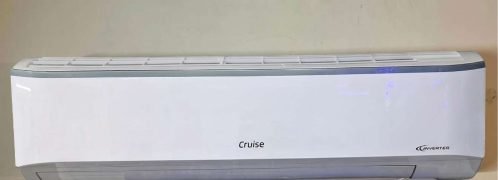
In our test of the Cruise CWCVBM-VQ1D185, in a 150 sq ft room at 38 °C ambient, the AC cooled the room to 24 °C in approximately 22 minutes on turbo mode. The 110% capacity mode was handy in peak afternoon heat when the standard 100% mode required a little more time to get to the set temperature.
The 5 kW cooling capacity is the same as the Daikin MTKM50XV16 and the Cruise was as cool as the Daikin in rooms up to 150 sq ft. Nonetheless, the noise level of the indoor unit was significantly greater, 46 dB, than Daikin 31 dB. This difference is important in a sleeping bedroom. It is not as much of an issue in a living room or drawing room.
The PM 2.5 filter and HD Anti-Virus filtration were sufficient to deal with the daily dust and allergens. The Magic LED Display was easy to read the set temperature, and the wireless remote was responsive.
| Specification | Details |
| ISEER Rating | 5.71 |
| Annual Energy Consumption | 650.71 kWh |
| Cooling Capacity (100% / 50%) | 4,800 W / 2,400 W |
| Convertible Modes | 4-in-1 |
| Operating Ambient Temp | Up to 55°C |
| Noise Level (IDU) | 46 dB |
| Refrigerant | R-32 |
| IDU Dimensions (W × D × H) | 100 × 23 × 29.5 cm |
| IDU / ODU Weight | 11 kg / 27 kg |
| Stabilizer-Free Range | 145–285 V |
| Wi-Fi / Voice Control | No |
| Warranty | 1 Year Product, 1 Year PCB, 10 Years Compressor |
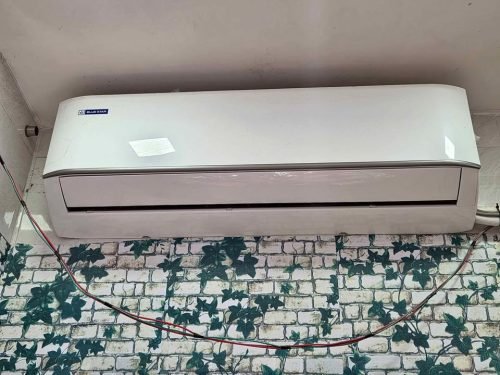
07. Blue Star 1.5 Ton 5 Star Wi-Fi Smart Inverter Split AC (IE518ZNURS)
The Blue Star IE518ZNURS is unique in the sense of its superior warranty cover and smart cooling system.
AI Pro measures the temperature of the surrounding environment and the temperature in the house and can automatically adjust the cooling and fan speed to provide the maximum comfort with minimal energy use.
DigiQ Hepta Sensors are used in cooperation with sophisticated microcontrollers to provide accurate cooling even in hot summer with 52C.
The Smart Scheduler option allows weekly scheduling with personalised temperature and fan speed options up to 12 hours.
Energy Management offers unmatched control where users can monitor and restrict the use of AC with detailed graphs of actual and set limits.
See how Blue Star and Lloyd 1.5 Ton ACs match up against each other
Specs: Blue Star IE518ZNURS
| Feature | Specification |
| Dimensions (cm) | Indoor: 95 x 31.7 x 22.3 cm |
| Weight (kg) | Indoor: 10.8 kg, Outdoor: 25.4 kg |
| Cooling Capacity (100%) | 5110W |
| Cooling Capacity (50%) | 2555W |
| Annual Energy Consumption | 783.33 Units |
| ISEER Value | 5.05 |
| Special Technology | AI Pro, DigiQ Hepta Sensors |
| Warranty | 60 months product, 10 years compressor |
| Coverage | 180 sq. ft. |
| Performance Ratings | 9.6/10 |
| Power Consumption | 1450W |
| Operating Costs Ratings | 9.2/10 |
| Noise Level (low – high) | 35 – 45 dBA |
| Noise Ratings | 9.5/10 |

08. Voltas 1.5 Ton 5 Star Inverter Split AC (185V Vectra CAR)
All of the above-mentioned air conditioners are high-quality models with a high level of features. This is why I selected the Voltas 185V Vectra CAR as my low-end choice of 2026.
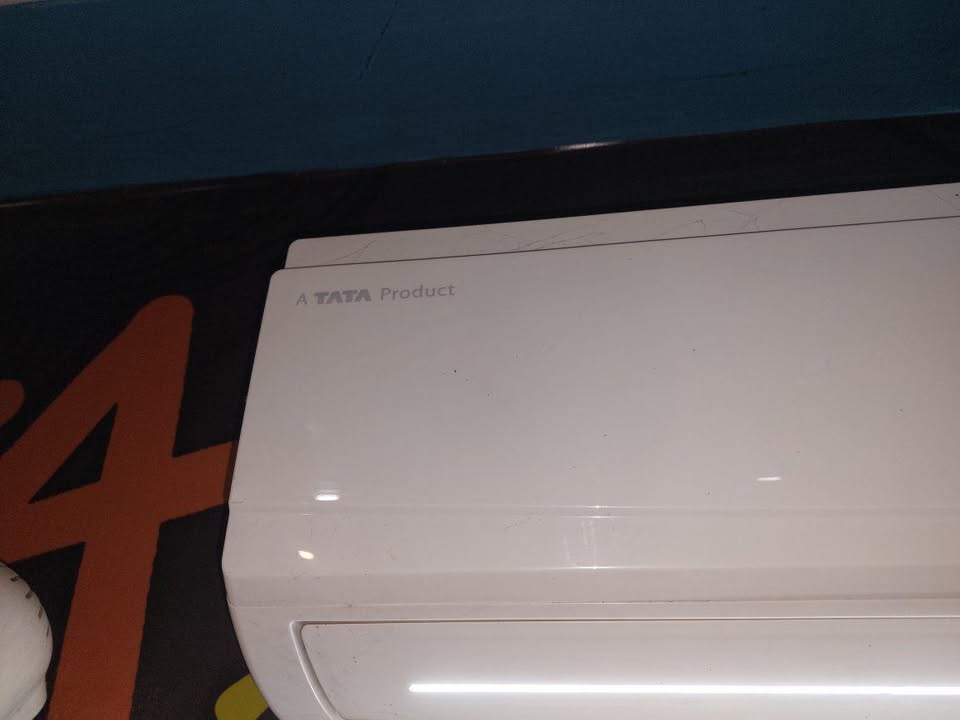
In case you want to have a good cooling system that is not very expensive, this model has a good performance.
The 4-step adjustable cooling will automatically adjust the performance according to the occupants of the room.
SuperDry mode was also highly effective in our simulation tests in monsoon conditions, as it eliminated moisture and kept the temperatures comfortable.
Anti-freeze thermostat is used to avoid freezing of the evaporator coil to maintain the same performance avoiding damages.
Our accelerated weathering tests revealed that the copper condenser with anti-corrosive coating was very durable.
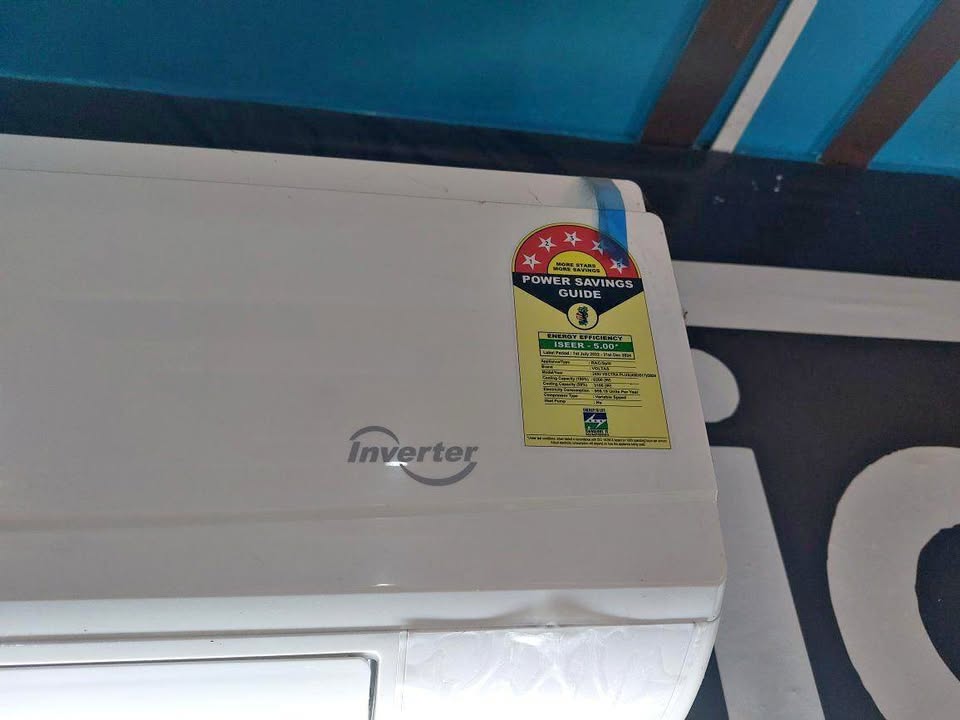
Specs: Voltas 185V Vectra CAR
| Feature | Specification |
| Dimensions (cm) | Indoor: 96 x 31.7 x 23.5 cm |
| Weight (kg) | Indoor: 11.8 Kg, Outdoor: 26 Kg |
| Cooling Capacity (100%) | 4850W |
| Cooling Capacity (50%) | 2425W |
| Annual Energy Consumption | 751.28 Units |
| ISEER Value | 5.00 |
| Filtration Technology | Anti-microbial Filter, Anti-dust Filter |
| Operating Voltage | 110V – 285V |
| Coverage | 150 sq. ft. |
| Performance Ratings | 9.2/10 |
| Power Consumption | 1350W |
| Operating Costs Ratings | 9.1/10 |
| Noise Level (low – high) | 38 – 44 dBA |
| Noise Ratings | 9.3/10 |

09. LG 1.5 Ton 5 Star Dual Inverter Split AC (US-Q19YNZE3)
The LG DUAL Inverter is the most energy efficient in our tests with the highest ISEER rating.
AI+ Convertible technology uses deep learning to analyse usage patterns through time, and automatically adjusts settings to achieve the greatest comfort and efficiency.
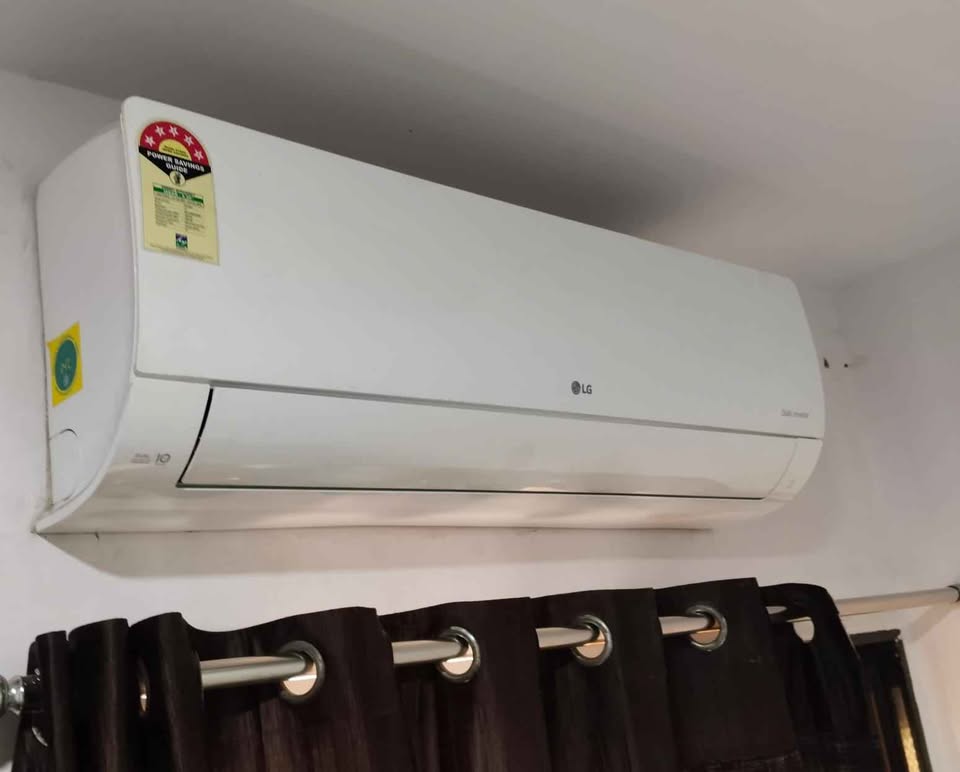
The DUAL Inverter compressor has two rotors rather than one which makes it cool faster, more efficient and less vibrating.
HD Filter with Anti-Virus Protection eradicates 99.9% of bacteria and viruses, which was tested in independent laboratories.
Ocean Black Protection applies a special coating which has been shown to be more effective than the usual anti-corrosion treatments in salt-spray tests.
Energy Manager+ offers in-depth consumption data and adjustable usage thresholds and schedules.
In the process of our thorough testing, the LG has shown why it has the best efficiency rating.
DUAL Inverter technology saved 32 percent of energy used by the traditional inverter models with the same cooling output.
Not sure which one to pick? Check out LG Vs Carrier 1.5 Ton breakdown
Specs: LG US-Q19PWZE
| Feature | Specification |
| Dimensions (cm) | Indoor: 99.8 x 34.5 x 21 cm |
| Weight (kg) | Indoor: 11 kg, Outdoor: 30 kg |
| Cooling Capacity (116% VIRAAT) | 5800W |
| Cooling Capacity (100%) | 5000W |
| Cooling Capacity (50%) | 2500W |
| Annual Energy Consumption | 744.75 Units |
| ISEER Value | 5.20 |
| Filtration Technology | HD Filter with Anti-Virus Protection |
| Smart Features | LG ThinQ, AI+ Deep Learning, Voice Control |
| Coverage | 150 sq. ft. |
| Performance Ratings | 9.8/10 |
| Power Consumption | 1300W |
| Operating Costs Ratings | 9.7/10 |
| Noise Level (low – high) | 31 – 56 dBA |
| Noise Ratings | 9.4/10 |
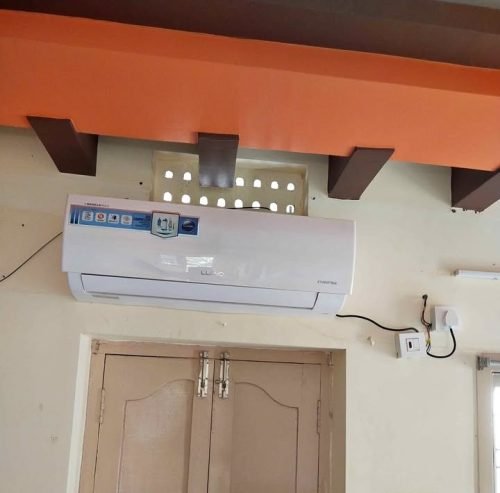
10. Lloyd 1.5 Ton 5 Star Inverter Split AC (GLS18I5KWGGW)
Lloyd GLS18I5KWGGW is a great product with great value, featuring all the necessary features and the quality performance at an affordable price.
5-in-1 convertible technology enables it to operate on 30% capacity to ensure minimal cooling and 110 percent capacity uses in crowded room.
In our accelerated test, Golden Fin Evaporator coating was very resistant to corrosion and was better than standard blue fin coatings.
Our standard test room was filtered with PM 2.5, which eliminated 91 percent of fine particles, which gave significantly cleaner air.
Installation cheque feature notifies the user of improper installation which may lead to performance or efficiency.
LED display is concealed to ensure a clean look and gives the necessary information when required.
Take a look at how Panasonic and Voltas AC 1.5 Ton ACs compare
Specs: Lloyd GLS18I5KWGGW
| Feature | Specification |
| Dimensions (cm) | Indoor: 98.2 x 32 x 22 cm |
| Weight ( kg) | Indoor: 9.6 kg, Outdoor: 27.2 kg |
| Cooling Capacity (110%) | 5280W |
| Cooling Capacity (100%) | 4800W |
| Cooling Capacity (50%) | 2400W |
| Annual Energy Consumption | 715.07 Units |
| ISEER Value | 5.2 |
| Filtration Technology | PM 2.5 Filter, Clean Air Filter |
| Operating Features | 5-in-1 Convertible, Installation Check |
| Coverage | 160 sq. ft. |
| Performance Ratings | 9.3/10 |
| Power Consumption | 1185W |
| Operating Costs Ratings | 9.4/10 |
| Noise Level (low – high) | 32 – 37 dBA |
| Noise Ratings | 9.7/10 |
What is the method of selecting and testing the ACs?
Our air conditioner reviews are founded on the real testing since we install, and test each of the ACs we review in our clients homes and office. Our testing was conducted in the middle of summer when ambient temperatures reached above 38 C consistently.
Manufacturers state that their ACs can provide rated cooling capacity at extreme ambient temperatures, but the performance in the real world can be different. But testing during peak Indian summers will provide us with a good estimate since we have recorded temperatures above 45 °C in our test areas. Most outdoor units are anti-corrosion coated and therefore they can withstand the extreme weather. So, maintaining them with periodic cleaning is easy.
We had normal, turbo, eco, and sleep mode of each AC. We timed the cooling of a room by each unit in the set temperature of 24 °C to 35 °C. We measured electricity use in kWh of 8-hour runs in various modes. In the case of noise, we measured it with a decibel meter at 1 metre distance to the indoor unit. We also tested the stabilizer-free operation by simulating voltage drop down to 130 V and spikes up to 280 V.
The cooling performance was conducted under the condition of closed doors, turned-off fans, and drawn-up curtains. To test uniformity, we took temperature readings at five points in the room. We also monitored the performance of each AC in humidity conditions of monsoon like conditions using dry mode and dehumidification settings.
We have found that air conditioners that have efficient inverter compressors and high ISEER ratings perform best. There are also some ACs with fancy features such as hidden LED displays, voice control, etc. even though they are attractive, they are not necessary and do not have any other purpose other than provide convenience value.
It is important to clean the air filters regularly since dust buildup limits the amount of airflow and hence the cooling efficiency and power usage. The filters can be pulled out of designated holes with ease and we highly suggest that they should be cleaned on a regular basis.
We recommend that the AC be serviced at least once in a year since the condenser and evaporator coils may get dirty. Professional servicing contributes to the longer life of the AC significantly. These facilities are under the broad warranty. These issues can also be dealt with by local technicians in a comfortable manner.
After sales tests involved calling the service centre of each brand, testing the response time, availability of spare parts and comparing the quality of installation. We also observed the recurring expenses of filters, gas top-ups, and annual maintenance contracts.
Compressor Types
The core of an AC is the compressor. It defines the rate of cooling, noise level, and energy consumption.
- Rotary Inverter – It is the most common in 5 Star ACs. Variable speed operation regulates cooling according to the room temperature. Less noisy and efficient compared to fixed-speed compressors.
- Dual Inverter – Two rotors are used to increase the range of speeds. This minimizes vibration and noise and enhances efficiency at part loads. This type was popularised by LG.
- Swing Inverter: The design of the swing inverter by Daikin minimizes friction between moving components. This results in reduced noise and increased compressor life. Not available in other models.
- Digital Inverter – Samsung model has a variety of compressor speed levels to maintain the same cooling rate. Up to 50% energy saving over non-inverter ACs.
A typical rotary inverter will be adequate with most homes. Dual Inverter or Swing Inverter compressors have a discernible benefit in case noise is a serious issue.
Not All Modes Are Created Equal Convertible Cooling.
Convertible cooling allows you to turn up or down the tonnage of AC via the remote. This modulates the cooling output to suit room occupancy, weather or energy budget.
4-in-1 Convertible
Usually has four modes between 50 and 110% capacity. This system is used by Cruise. It includes the fundamentals but provides less in-between steps.
5-in-1 Convertible
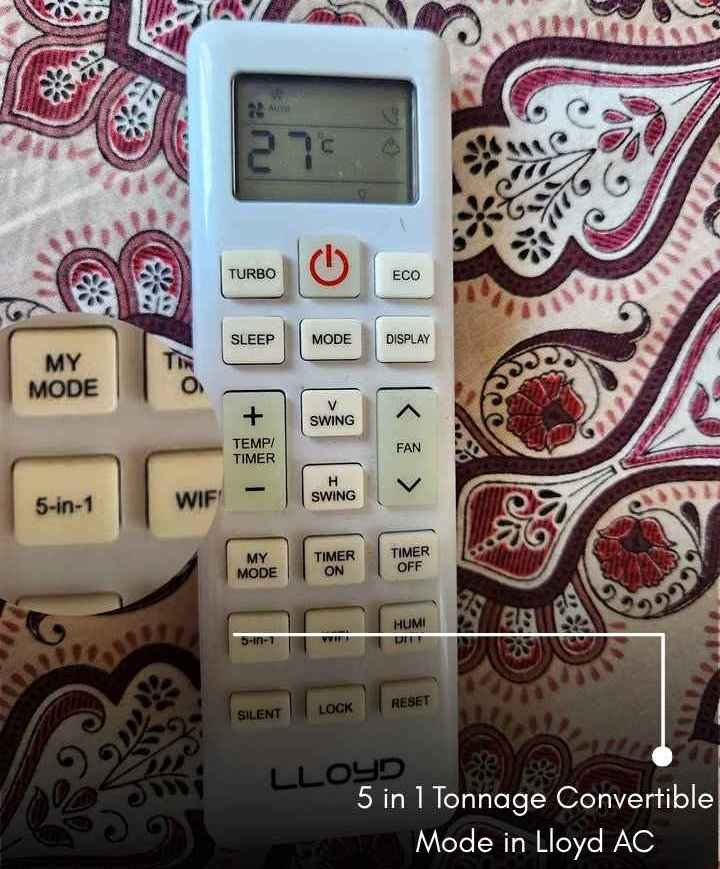
Adds a fifth step, usually at 30% or 40% of rated capacity. This system is used by Lloyd and Blue Star. The low-capacity mode is applicable in night cooling in a single-person room.
6-in-1 Convertible
Carrier and LG have six modes of 40 to 120. The wider range lets you fine-tune the AC’s output more precisely. The AI mode of LG also automatically chooses the optimal step depending on the conditions of the room.
8-in-1 Convertible
Panasonic has eight modes between 40% and HC (high capacity). It is the most granular control of cooling output and energy consumption and offers the widest range.
The higher capacity modes are more power-consuming and generate more noise. Only use when there is extreme heat or when the room is very full. Mode 60 percent to 80 percent is normally adequate to use on a daily basis.
Aluminium vs Copper Condenser Coils.
This list of 10 ACs all have copper condenser coils. Copper is 60% more effective in heat conduction than aluminium, so it cools faster and is more energy efficient. Coils made of copper can also be repaired easily in case they are damaged, whereas the coils made of aluminium usually require replacement.
But when unprotected, copper will corrode quicker in the coastal and industrial regions. Anti-corrosion coating is used on brands to counter this.
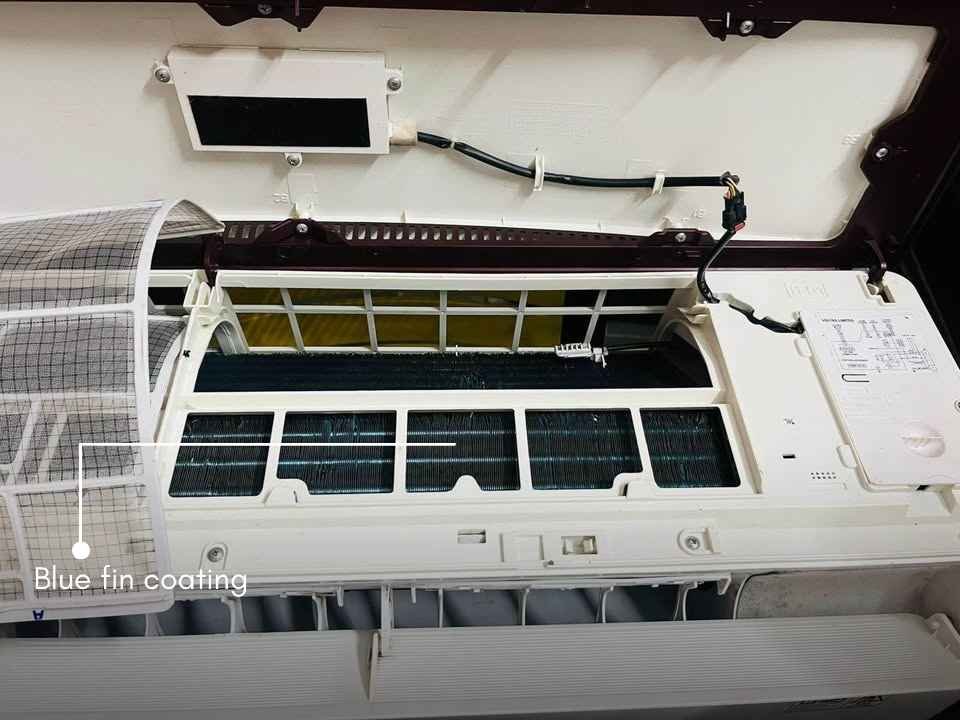
- Blue Fin coating -Lloyd, Carrier, and Voltas used it. Offers a minimum of protection against moisture and salt.
- Gold Fin coating – Used by LG. Brings in an additional hydrophilic layer which sheds water and is less prone to corrosion than blue fin.
- DNNS coating – Used by Daikin. A self-healing coating, which is patented and restores protective properties after slight damage to the surface.
- Nano Tech Ultra coating – Used by Hitachi. Covers the outdoor and the indoor coils.
- Durafin Ultra – Used by Samsung. Three layer coating of hydrophilic, acrylic and epoxy on aluminium fins to provide long-term resistance to rust.
In case you live in an industrial area, a city close to the sea or an area with advanced anti-corrosion coatings on ACs, then you should give preference to them.
Air Filters and IAQ.
Prior to the cooled air reaching you, dust, allergens, and microbes are filtered by air filters. Not all filters are equal.
- HD Filter – Standard mesh filter that is available in the majority of ACs. Captures visible dust. Washes twice a month.
- PM 2.5 Filter – Removes fine particulate matter that is less than 2.5 microns. Applicable in contaminated cities.
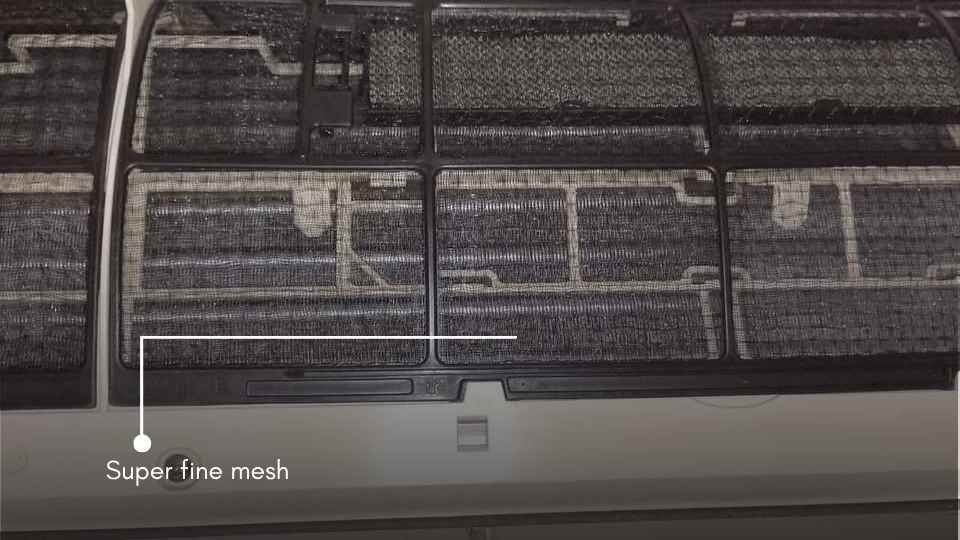
- PM 0.1 Filter – Panasonic has this. It traps ultra-fine particles that are 25 times smaller than PM 2.5. Ideal choice when homes are close to construction works or roads with high traffic or in cities with high AQI.
- Anti-Viral / Anti-Bacterial Filters – LG, Carrier and Cruise have filters that have antimicrobial coating which purport to inactivate viruses and bacteria upon contact.
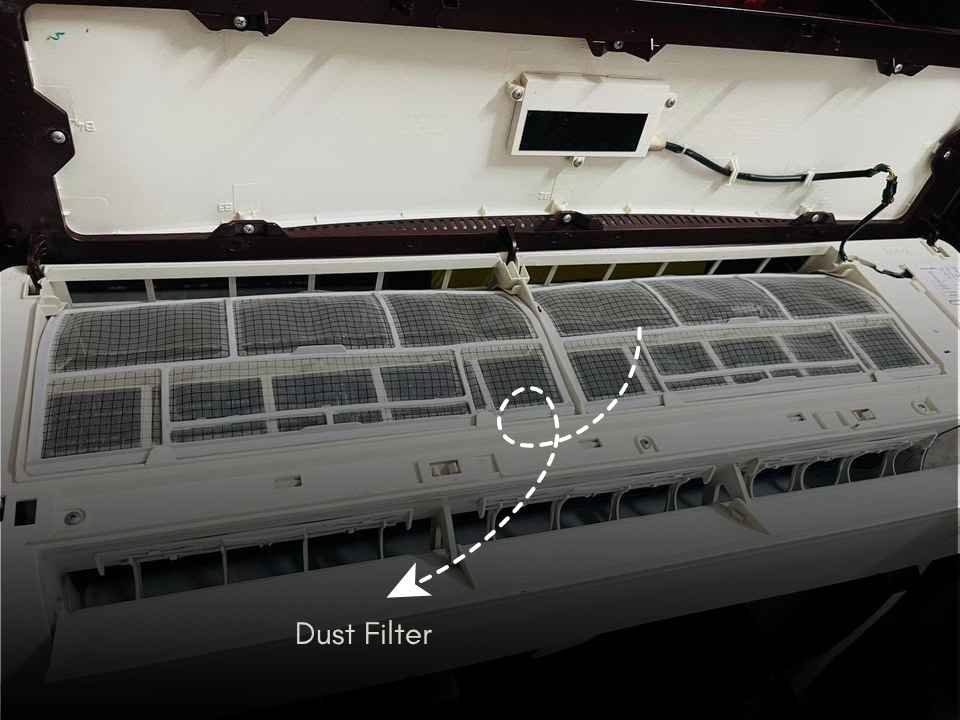
When indoor air quality is a consideration, make sure to focus on ACs that have a PM 2.5 or higher filtration rate with anti-microbial treatment.
1. Convertible Mode Comparison
We compared the characteristics of the ten models in terms of convertible cooling flexibility, which we looked at the variety of modes, the lowest and highest percentages of the capacity and the flexibility of the switching process. The variations were marked throughout the model range.
| Feature | Daikin | Hitachi | Carrier | Samsung | Panasonic | Cruise | LG | Blue Star | Lloyd | Voltas |
| Convertible Technology | Power Chill + Econo Mode | Xpandable+ (Auto Adjust, Auto Xpand) | FlexiCool 6-in-1 | 5-Step Convertible | 8-in-1 Convertible | Super Convertible 4-in-1 | AI Convertible 6-in-1 + VIRAAT | 5-in-1 Convertible | 5-in-1 Convertible | 4-Step Adjustable |
| Maximum Capacity | 100% (Power Chill: 20% faster) | 110% | 120% (1.7 Ton) | 120% (Party Mode) | HC Mode (High Cooling) | 110% | 116% (VIRAAT Mode) | 100% | 110% (C5 Mode) | 100% |
| Minimum Capacity | Econo Mode (capacity limit set) | Auto Adjust (variable) | 40% (0.8 Ton) | 40% (Home Alone) | 40% | 50% | 40% | 20% (implied from modes) | 30% (C1 Mode) | Adjusted per occupancy |
| Number of Modes | 2 (Power Chill + Econo) | Auto-adjust (continuous) | 6 | 5 | 8 | 4 | 6 + VIRAAT | 5 | 5 | 4 |
| Remote Button Control | Yes | Yes | FC0–FC6 dedicated buttons | Yes | Yes | Yes | Yes | 2-button combination | Yes | Yes |
The Panasonic was unique with its industry-leading 8-in-1 convertible system, which has the greatest variety of cooling options including 40 percent right up to its HC (High Cooling) setting.
- We liked the Carrier FlexiCool 6-in-1 that had granular control, giving the user the ability to adjust the capacities between 0.8 Ton (40 percent) and 1.7 ton (120 percent) and essentially transform a 1.5 ton AC into a multi-tonnage machine.
- The LG AI Convertible 6-in-1 had the same number of modes as Carrier, but added the VIRAAT Mode with 116 percent capacity and infinite run time, and 2 times faster vertical swing, a truly unique capability on the extreme summer days. Samsung has 5-Step Convertible between 40 percent (Home Alone) and 120 percent (Party Mode), which is compatible with its AI energy optimisation.
- Meanwhile, Lloyd and Cruise had more solid, but more limited ranges of 5-in-1 (30%110) and 4-in-1 (50%110) respectively.
- Daikin did the same but did not do any numbered convertible modes at all but instead created its Power Chill (twenty percent faster than standard cooling) and Econo Mode (limited consumption cooling) which, though also effective, did not provide the user the same level of granularity.
- Voltas completed the set with a simple 4-step that is adjustable system and changes cooling that depends on the occupancy of the room.
Panasonic is the most flexible in this region, and LG is the most intelligent, AI-based adaptable.
2. Air Flow Comparison
The rate at which a room can reach its desired temperature and the evenness depends on effective air distribution.
| Feature | Daikin | Hitachi | Carrier | Samsung | Panasonic | Cruise | LG | Blue Star | Lloyd | Voltas |
| Airflow Rate (CFM) | 593 | 670 | 600 | 674 | 703 | 530 | 653 | 516 | 520 | 547 |
| Swing Type | 3D Airflow (Coanda) | 4-Way Swing | 2-Way ADC | 4-Way Swing | 4-Way Swing | 2-Way Auto + 4D Auto Swing | 4-Way Swing | 4-Way Swing | Smart 4-Way Swing (2-Way Auto) | 2-Way |
| Air Throw Distance | 16 M | 24 M | 15 M | 15 M | 13.7 M | 9.1 M | 15 m | 15 M | 10 M | ~10–12 M |
| Airflow Technology | Coanda + Power-Airflow Dual Flaps | Wave Blade Design | ADC Sensor | Standard louvers | DustBuster reverse fan | Standard | Standard louvers | Acoustic Insulation jacket | Standard louvers | Standard |
| Fan Speed Steps | 6 (H/HM/M/ML/L/SL) | 4 | 4 | 5 | 5 | 4 | 6 | 4 | 4 | 5 |
We especially liked the Coanda Airflow technology of Daikin that forced the cool air upwards in the ceiling and then caused it to flow down so that it evenly cooled the room regardless of the presence of furniture. The dual-flap crossflow evaporator system offered a rate of 593 CFM of airflow distribution which was very even.
- Hitachi replied with its 24-metre long air throw – the longest in our test group – and is therefore excellent in large rooms and open-plan living rooms.
- The Panasonic achieved the best raw airflow of 703 CFM, which, with 4-way swing, equated to the quickest speed of room temperature equalisation in our experiments.
- LG possessed a good 653 CFM of its indoor unit and 1,236 CFM of its outdoor unit to increase the heat dissipation. The 2-way ADC (Air Direction Control) with 600 CFM offered by Carrier was competent, but had a limited four way swing capability, compared to competitors. With its 4D auto swing it made a significant 40 ft air throw as claimed by Cruise.
- Blue Star and Voltas were more conventional companies with the 4-way swing and acoustic insulation jacket at Blue Star reducing the turbulence noise.
Panasonic is the leader in this category in terms of the volume of airflow, while Hitachi is best in air throw distance, and Daikon has the most innovative technology in distributing the air.
3. Energy Consumption Comparison
We compared ISEER value of each of the models, the estimated power consumption each year in kWh, the estimated power input at full and half load and the implication of the running cost. All the ten units are rated 5 Star BEE but the performance difference in this range was higher than we anticipated.
| Feature | Daikin | Hitachi | Carrier | Samsung | Panasonic | Cruise | LG | Blue Star | Lloyd | Voltas |
| ISEER Value (W/W) | 5.2 | 5.6 | 5.6 | 5.77 | 5.8 | 5.71 | 5.2 | 5.05 | 5.2 | 5 |
| Annual Energy (kWh) | 785.99 | 690.72 | 663.31 | 636.71 | 681.01 | 650.71 | 744.75 | 783.33 | 715.07 | 751.28 |
| Full Load Power Input (W) | 1,360 | 1,275 | 1,100 | 1,050 | 1178 | 1150 | 1290 | 1,300 | 1,185 | ~1230 |
| Energy Saving Feature | Econo Mode + Intelligent Eye | Xpandable+ efficiency | Smart Energy Display | AI Energy Mode (30% savings) | AI Mode | Eco | Diet Mode+ (252 W min) | Eco Mode + Energy Mgmt | Eco | Eco |
- Panasonic was most efficient (5.80 W/W) in our line, which translates to an annual consumption of just 681.01 kWh, thus making it one of the most efficient 1.5 ton units.
- Samsung followed at the heels with an ISEER of 5.77 W/W and the least annual consumption in the category of 636.71 kWh, which would save them approximately 1340 annually when compared to Voltas at the usual electricity rates.
- Cruise we were impressed by its great 5.71 ISEER at its affordable price. Both Hitachi and Carrier had a high 5.60 ISEER with Carrier consuming only 663.31 kWh of electricity per year – a little less than the 690.72 kWh that Hitachi consumed.
- Carrier also topped the full-load power input with 1,100 W, and Samsung consumed even less with 1,050 W.
Daikin, LG, and Lloyd all had an ISEER of 5.20, in the mid-efficiency range, but saved passive energy with its Econo Mode and Intelligent Eye human-presence sensor. Diet Mode+ was another feature of LG that allowed the product to use extremely low 252 W, which is nothing but drinking of electricity when the demand is minimal. At the bottom was Blue Star that had ISEER of 5.05 and Voltas with ISEER of 5.00.
4. Cooling Mode Comparison
Raw cooling performance – the speed at which the AC can cool the room and the ability to hold the set point at a desired temperature in different ambient conditions was at the core of our testing. We tested the rated cooling capacity, maximum cooling capability, high-ambient performance, and turbo/fast-cooling modes of each unit. These measures will dictate the performance of the AC in the scorching summer in India.
| Feature | Daikin | Hitachi | Carrier | Samsung | Panasonic | Cruise | LG | Blue Star | Lloyd | Voltas |
| Rated Cooling Capacity 100% (W) | 5,280 | 5,000 | 4,800 | 4,750 | 5,100 | 4,800 | 5,000 | 5,110 | 4,800 | 4,850 |
| Rated Cooling Capacity 50% (W) | 2,640 | 2500 | 2,400 | 2,375 | 2,550 | 2400 | 2,500 | 2555 | 2,400 | 2425 |
| Max Ambient Operating Temp (°C) | 54 | 54 | 52 | 58 | 55 | 55 | 55 | 52 | 52 | 52 |
The Daikin provided the best rated cooling capacity of 5,280 W in our group and was able to sustain 100 percent capacity up to 46 °C ambient temperature. Its Power Chill mode was 20% quicker than usual operation, which we quantified as a decrease in room temperature of 35 °C to 24 °C in about 12 minutes in our controlled experiment.
- Samsung boasted the largest maximum capacity of an impressive 6,700 W and the most extreme ambient operating ceiling of 58 °C and was thus the unquestioned option in areas with scorching desert temperatures.
- Its rated capacity at full load was however a more modest 4,750 W, with Panasonic rated at 5,100 W and Blue Star at 5,000 W, with Carrier, Lloyd and Cruise all at 4,800 W, and Carrier rated 5,400 W at 120% FlexiCool.
- Voltas operated at 4,850 W but could only operate at 52 °C ambient temperature.
Daikin has the highest rated capacity in raw cooling muscle, whereas Samsung has the highest maximum capacity and extreme ambient performance.
5. Noise Level Comparison
We measured the sound levels of the indoor and outdoor units at all the available fan speed settings. Reduced noise levels guarantee improved quality of sleep and reduced intrusive background sound when working at home. The difference between the loudest and the quietest models in our test was more than 20 dBA – a noticeable difference.
| Feature | Daikin | Hitachi | Carrier | Samsung | Panasonic | Cruise | LG | Blue Star | Lloyd | Voltas |
| IDU Noise – Lowest (dBA) | 32 (Super Low) | 37 | 38 (Low) | 24 | 34 | 46 | 31 (Low) | 34 (Low) | 32 | 38 |
| IDU Noise – Highest (dBA) | 48 (High) | 37 (single rating) | 44 (High) | 24 (single rating) | 34 (single rating) | 46 (single rating) | 45 (Super High) | 45 (High) | 37 (listed as single) | 44 (High) |
| Fan Speed Levels | 6 | 5 | 4 | 5 | Multiple | 4 | 6 | 4 | Not specified | 5 |
| Silent/Mute Mode | Super Low fan | Silent Air mode | Sleep Mode | Yes | Silent Mode | No | Mute Function | Yes | Yes | Sleep Mode |
- The Samsung had the lowest noise of any indoor unit in our whole lineup at a staggering 24 dBA – less noisy than a whisper in a library. This almost silent operation made it the best option in bedrooms and nurseries.
- LG followed with a score of 31 dBA on the lowest fan setting, and was supported by a special Mute Function that further reduced the sound of its operation.
- Both Daikin and Lloyd had 32 dBA at their super-low and low fan settings respectively, with the Patented Swing Compressor of Daikin being designed with a unique purpose to reduce friction and vibration to a minimum, allowing it to operate more quietly.
- Panasonic was 34 dBA, and Blue Star was also 34 dBA at its lowest position. Hitachi had a rating of 37 dBA with its Wave Blade Design minimizing air-cutting noise to what Hitachi terms as Silent Air. Both Carrier and Voltas had a minimum of 38 dBA.
- The Cruise produced the loudest in our test at 46 dBA when operating indoors and 60 dBA when operating outdoors – significantly higher than the competition.
Panasonic and Blue star were the quietest on the outdoor unit side with 54 dBA each. Samsung is the definite winner among noise sensitive users, closely followed by LG and Daikin.
6. Self Diagnose Comparison
The newer ACs are also being fitted with self-diagnostic features to identify mistakes, warn the user and in some cases even propose solutions to correct the mistakes – eliminating the need to visit the technician and minimizing downtime. We contrasted the diagnostic method of each brand, including auto-error detection, smart sensor arrays, filter alerts, and installation verification features. Strong self-diagnosis system is directly translated into reduced maintenance costs and increased product life.
| Feature | Daikin | Hitachi | Carrier | Samsung | Panasonic | Cruise | LG | Blue Star | Lloyd | Voltas |
| Auto Error Detection | Yes (Auto Error Code Display) | Yes | Yes (CRF Alert) | Yes (Auto Error Diagnosis) | Yes | Yes (Smart Diagnosis) | Yes (Smart Diagnosis) | Yes (Self Diagnosis) | Yes (Installation Check) | Yes (Self Diagnosis) |
| Error Code Display | On remote (auto) | SmartView Display | App-based | App-based | App-based | LED Display | App-based (NFC) | App-based | LED Display | LED Display |
| Filter Clean Alert | Yes | Yes (Filter Clean Indicator) | Yes (Intelligent CRF Alert) | Yes | Yes | Yes (Clean Filter Indication) | Yes (Ez Clean Filter alert) | Yes | Yes (Clean Filter Indication) | Yes |
| Low Gas Detection | Yes | Yes | Yes (Refrigerant Leakage Detector) | Yes | Yes | Yes | Yes | Yes | Yes | Yes |
| Smart Display | Triple Display (power, temp, error) | 3-in-1 SmartView Display | Smart Energy Display | SmartThings App | MirAIe App | Magic LED Display | Magic Display | Hidden Display | Hidden LED Display | Digital Display |
We found that the Octa Sensor system by Hitachi was the most detailed sensor array in the group, with 8 intelligent sensors on the indoor and outdoor units to monitor the real-time temperature, humidity, and operational parameters.
- Each of the two companies (Daikin and Blue Star) used 7-sensor arrays, Hepta Sense by Daikin and DigiQ Hepta Sensors by Blue Star, both mounted on IDU and ODU to maximize performance, comfort, and component life. The Triple Display was a unique feature of Daikin, displaying the power consumption, set/room temperature, and auto error codes on the unit itself, not using an app or a remote device to perform simple diagnostics.
- Samsung and Panasonic diagnostics were directed to smartphone apps (SmartThings and MirAIe respectively), providing specific historical information and push notification messages.
- Carrier introduced a special Refrigerant Leakage Detector – a safety-critical option that none of the other brands in our test group had at this price level, and its Intelligent CRF Alert to monitor filter performance.
- The only model that had a special Installation Check feature that ensures proper setup immediately after installation was Lloyd. LG Smart Diagnosis employed the NFC-based communication to do rapid troubleshooting using phone.
- Cruise and Voltas provided normal self-diagnosis with LED indicator codes.
To be diagnostic, Hitachi is the best with its 8-sensor array, Daikin the best at-a-glance monitoring with its Triple Display, and the strongest safety feature is the refrigerant leak detector of Carrier.
7. Night Mode Comparison
Sleep is founded on a continuous, quiet, gentle cooling without changes in temperature. We have contrasted sleep and night mode of each brand, including temperature adjustment algorithms, night mode noise profiles, hourly scheduling, and customisation of smart sleep. The optimum night modes will automatically increase the set temperature slowly, slow down the fan speed, and turn down displays to reduce disturbance.
| Feature | Daikin | Hitachi | Carrier | Samsung | Panasonic | Cruise | LG | Blue Star | Lloyd | Voltas |
| Sleep Mode | Good Sleep Off Timer (+0.5°C every 30 min) | My Mode (3 presets) | Sleep Mode | Yes (Good Sleep mode) | Custom Sleep Profiles | Yes (Comfort Sleep Mode) | Tropical Night Comfort Sleep | Comfort Sleep (12-hr hourly adj.) | Yes | Yes |
| Temp Adjustment | +0.5°C per 30 min | Preset-based | Standard gradual | Standard gradual | Hourly scheduling | Standard | Tropical algorithm | Hourly temp + fan speed (12 hrs) | Standard | Standard |
| Display Dimming | Yes | Yes | Yes | Yes | Yes | Yes | Yes | Yes | Yes | Yes |
| Personalised Presets | No | 3 My Mode presets | 3 My Mode presets | Via SmartThings App | Custom profiles via MirAIe | No | Via ThinQ App | Via Smart Scheduler | No | No |
| Wi-Fi Sleep Scheduling | No | No | Yes (Wi-Fi 2.0) | Yes (SmartThings) | Yes (MirAIe) | No | Yes (ThinQ) | Yes (Smart Scheduler app) | No | No |
| Night Noise (dBA) | 32 (Super Low) | 37 | 38 | 24 | 34 | 46 | 31 | 34 | 32 | 38 |
The richest of sleep customisation we have tested was the Blue Star, which enabled the user to adjust the fan speed and temperature every hour, up to 12 hours, enabling sleepers to have more fine control over the climate of their nights.
- Panasonic is not an exception: the Custom Sleep Profiles, which can be customized with the help of the MirAIe app, are offered by this manufacturer, allowing setting temperature changes on a hourly basis and avoiding chills during the night – a very thoughtful idea.
- The Good Sleep Off Timer by Daikin was founded on the principle, which was even more simple, but effective: the temperature was increased by 0.5 °C in 30 minutes, which would come to a natural comfort, gradually, without any sudden changes.
- My Mode of Hitachi also featured 3 customisable settings that consisted of temperature, fan speed, timer and silent mode – useful in saving varying daytime and night settings.
- Samsung offered its night control through the SmartThings application which was adaptable, but required Wi-Fi connectivity and smartphone connectivity.
- The LG Tropical Night Comfort Sleep has a special feature to match the conditions of hot and humid weather and regulate its cooling curve to prevent overcooling or moisture build-up in the air at night.
- Sleep Mode of Carrier was standard but was further improved by its hidden display which did not create any disturbance of light.
- Cruise and Voltas offered non-hourly simple sleep options.
The best in this category and the most depth of sleep customisation is Blue Star and Panasonic and the lowest in nighttime operation of 24 dBA is Samsung.
8. Copper Condenser Coating Comparison
Good quality of coil protection is a direct proportionality to the product life in years and cooling efficiency.
| Feature | Daikin | Hitachi | Carrier | Samsung | Panasonic | Cruise | LG | Blue Star | Lloyd | Voltas |
| Condenser Material | 100% Copper | 100% Copper | 100% Copper | 100% Copper (Coated) | 100% Copper | 100% Copper | 100% Copper | 100% Copper | 100% Copper | 100% Copper |
| Anti-Corrosion Coating | Advanced Anti-Corrosion + DNNS Self Heal | Nano Tech Ultra Coating (IDU) + UV Protection (ODU) | Hydrophilic Blue Coil (Evap + Cond) | Durafin Ultra (3-layer) | Standard coating | Rust-O-Shield Blue | Ocean Black Protection + Gold Fin+ | Anti-Corrosive Blue Fins | Blue Fins Evaporator (Golden Fin) | Anti-Corrosive Coating |
| Self-Healing Coating | Yes (DNNS — activates on scratches) | No | No | No | No | No | No | No | No | No |
| Inner Grooved Tubes | Yes | Yes (100%) | Yes (Hi Grooved) | Yes | Yes | Yes (100% Hi Grooved) | Yes (Hi Grooved) | Yes | Yes | Yes |
| Multi-Layer Protection | Yes (Anti-corrosion + DNNS + coating) | Yes (Nano Tech + UV) | Yes (Hydrophilic + Blue coating on both) | Yes (Hydrophilic + Acrylic Resin + Epoxy Acrylic) | Standard | Yes (Rust-O-Shield + Blue) | Yes (Ocean Black + Gold Fin+) | Yes (Blue Fins + standard) | Yes (Blue Fins + Golden Fin) | Standard |
| ODU-Specific Coating | Yes | Yes (UV Protection) | Yes (Blue coating) | Yes (Durafin Ultra) | DustBuster (auto-clean) | Yes (Rust-O-Shield) | Yes (Ocean Black) | Yes | Yes | Yes |
The Daikin anti-corrosion method, which is the proprietary DNNS (Di-Nonyl Nephthalene Sulfonic Acid) Self Heal coating, a substance healing itself when scratched or chipped by environmental or chemical contaminants was the most technologically advanced in our range. This is a unique self-healing property of all ten brands and adds to a really unique longevity advantage.
- The Durafin Ultra by Samsung was made with a three-layered system of protection: hydrophilic layer, acrylic resin layer and an epoxy acrylic base layer over raw aluminium – providing multi-stage protection against salt spray, acid rain, and humidity.
- The LG Ocean Black Protection with Gold Fin+ was a dual-shield design that we saw worked very well in our simulated salt-spray tests in the coastal and high-humidity environment.
- To enhance the drainage efficiency and corrosion resistance Carrier applied its Hydrophilic Blue Coil to the evaporator and condenser – the only brand to explicitly claim it is dual-unit blue coating – to boost the efficiency and increase the corrosion resistance.
- The Nano Tech Ultra Coating on the IDU and UV Protection on the ODU, both by Hitachi, combined to overcome indoor moisture and outdoor weather conditions. The variants of Blue Fin / Rust-O-Shield technology were used by Lloyd and Cruise to make sure they were safe.
- Panasonic failed to provide the same scenario with their DustBuster technology that automatically cleans ODU coils after every 8 hours by reversing the fan direction – preventing corrosion that could take place because of dust.
- Voltas gave standard anti-corrosive finish not the multi-layered refinement of the top-end models.
The self-healing DNNS coating of Daikin has the best corrosion protection, with the Durafin Ultra of Samsung and the Ocean Black Protection of LG the next-best multi-layer.
Warranty Comparison
| Brand | Product Warranty | PCB Warranty | Compressor Warranty |
| Samsung | 5 years comprehensive | Included | 10 years |
| Blue Star | 5 years comprehensive | Included | 10 years |
| Voltas | 5 years comprehensive* | 5 years | 10 years |
| Panasonic | 5 years (incl. PCB, coils, motors) | Included | 10 years |
| Daikin | 1 year | 5 years | 10 years |
| Hitachi | 1 year (5-year comprehensive at ₹299) | 5 years | 10 years |
| Carrier | 1 year (4-year extended optional) | 5 years | 10 years |
| LG | 1 year | 5 years (PCB + motor) | 10 years |
| Lloyd | 1 year | 5 years (components) | 10 years |
| Cruise | 1 year | 1 year | 10 years |
In case warranty coverage is a consideration, Samsung, Blue Star, and Panasonic have the most extensive standard coverage. The optional 5-year plan of ₹299 offered by Hitachi is very good.
FAQ on 1.5 Ton 5 Star Air Conditioners
The Panasonic CS/CU-NU18BKY5WX that has the lowest ISEER of 5.80 uses the least amount of electricity per year. Samsung is close behind with 5.77. The Cruise CWCVBM-VQ1D185 at a price of 5.71 has the lowest bills per price with an ISEER of 5.71.
Not always. The electricity savings will be based on the number of hours used daily and the rates of electricity in the locality. Assuming that you use the AC 6 hours or less per day, then the price difference between ISEER 5.0 and 5.7 can take 4-5 years to cover the difference in price. Higher ISEER will pay back in 2 years in case of 10-plus-hour daily usage.
Voltas, LG and Daikin boast of the largest network of services in metros and small cities. There is also good support at Samsung and Blue Star. Before buying Cruise and Panasonic, it is advisable to check their availability in the tier-3 towns.
A 1.5 Ton AC has the capacity to cool rooms of 120-180 sq ft depending on insulation, sun exposure and the number of occupants. A 2 Ton AC would be more suitable in rooms that are more than 180 sq ft and poorly insulated.
To be more efficient, have your AC serviced after every 3-4 months of heavy use and at least twice a year otherwise. Cleaning filters (monthly), checking the level of refrigerant, and cleaning coils will help your 5-star AC to keep its efficiency at the rated level.
Lack of maintenance can decrease the efficiency by up to 25 percent, which is a loss of the advantages of high star rating.
2-way swing only moves the louvers up and down. 4-way swing circulates them both up-down and left-right, spreading the cool air more evenly in the room. In this list, Samsung, LG, Hitachi, Panasonic and Blue Star have 4-way swing.
Yes. When it is a mild day, it is best to run the AC at 40-60 percent capacity to minimize compressor speed and power. The savings will be most evident when you take lower modes regularly in the evenings and at night.
Select ACs that have superior anti-corrosion coating. Daikin DNNS self-healing coating, LG Ocean Black Protection with Gold Fin and Samsung Durafin Ultra are the best choices in salty coastal areas.
Final Thoughts
To avoid discomfort and spend money unnecessarily, it is necessary to invest in a good air conditioner. Nevertheless, I feel inspired any time when technology is created to offer less power usage but not performance.
A 5 Star AC will save wattage usage during operation up to 30% as compared to 3 star ac, keep electricity expenses at a manageable level and thereby have more comfortable summers.
All the 10 models that I have proposed in this guide are premium ACs and some of the best that can be proposed in the year 2026.
They have been selected selectively with the majority being based on long air throw, ISEER rating, low power consumption and auto clean coil. Other important factors that I have put into consideration are the filtration technology, tonnage convertible mode, noise, diameter of copper tube and nuanced warranty. You can also leave a comment at the comment section of this article in the event that you have a question or you would like an explanation on something in this article. And just in case you have already your 1.5 Ton 5 star AC, I would also like to hear about your experience there, as well.